What will happen to U.S. Trade Tariffs?
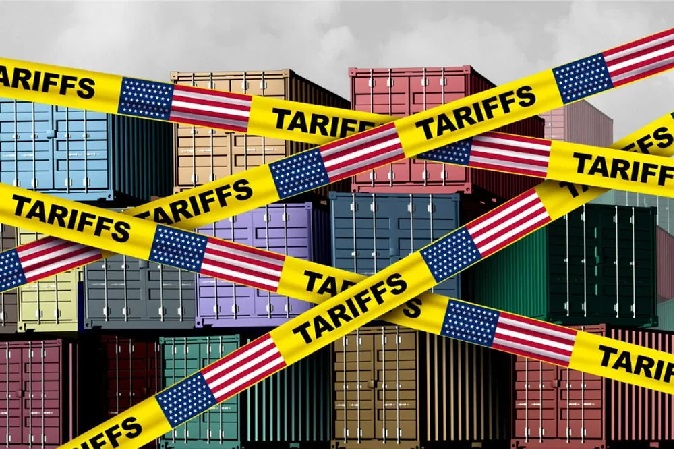
We believe the SCOTUS will rule Trump's tariffs illegal under the IEEPA. Tariffs will ultimately be limited to those legally permitted under Section 232 and Section 301 — and overall tariffs will be reduced.
We do not believe that the trade tariffs decided by the American government will hold against the legal claims that have been filed against them. Indeed, the law used by the U.S. government to implement economic tariffs is the International Emergency Economic Powers Act (IEEPA). This law is applicable in the case of wartime or against terrorist states but not in the case of commercial disputes where setting tariffs is the sole competence of the U.S. Congress.
We believe that the U.S. Supreme Court of the United States ("SCOTUS") will rule that Trump's tariffs are illegal.
Indeed, the majority of the conservative judges in the SCOTUS are "textualists" meaning that they focus on the wording of laws when interpreting them. They also favor the so-called "major questions doctrine" whereby the government must be granted clear congressional authorization for matters of significant economic impact. Based on these two doctrines, we believe that it is highly likely that the SCOTUS will strike down the tariffs that have already been ruled as illegal at the district court level.
Trump wants to keep trade tariffs. Therefore, his government will have to limit itself to the two following tools that are legally possible:
1. Section 232 of the U.S. Trade Expansion Act of 1962: this section limits imports in the case of a threat to national security insofar as such imports threaten the ability of companies in the United States to produce essential goods for defense and other critical industries.
2. Section 301 of the U.S. Trade Act of 1974: this section allows the U.S. to impose tariffs in response to unfair trade practices.
Section 232 of the U.S. Trade Expansion Act of 1962 will allow for tariffs in areas such as copper, aluminum, lumber, cars and car parts, electronic devices, etc.
Section 301 of the U.S. Trade Act of 1974 will allow for tariffs in the following cases:
(a) non-reciprocity in trade tariffs between the United States and the foreign country (e.g. foreign countries have higher import tariffs than those applied in the United States on imports);
(b) foreign companies benefit from subsidies in their country (e.g. Chinese electric vehicles);
(c) foreign countries put in place unfair trade barriers or trade restrictions (e.g. European restrictions on U.S. meat due to the use of hormones).
Sections 232 and 301 will therefore allow the U.S. to maintain tariffs, but only in certain clear cases.
"Blanket" country tariffs will be replaced by the following:
1) Section 232 tariffs on aluminum, copper, steel, electronic devices and semiconductors, auto parts, aeronautical parts, machinery parts and equipment.
2) Section 301 tariffs on the EU (various trade barriers, including on meat imports and non-reciprocal tariffs), India (trade barriers and non-reciprocal tariffs), and China (technology companies, automotive companies, etc.).
For investors, the bottom line is that overall tariffs will be reduced, and this will be positive for companies and the American economy.