Crude economic realities
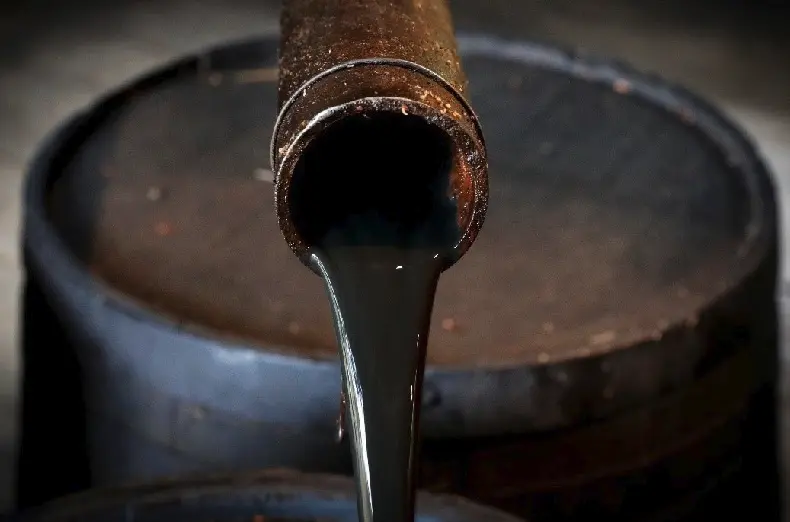
While the “blockade of the blockade of the Strait of Hormuz” was initially mocked by many, the U.S. naval blockade has fundamentally changed the economic situation in Iran.
While the “blockade of the blockade of the Strait of Hormuz” was initially mocked by many, the U.S. naval blockade has fundamentally changed the economic situation in Iran. Indeed, Iranian prewar oil exports were about 2mio barrels/day (bbl/d), most of which were headed to China. After the start of the war, these exports dropped to about 1.6mio bbl/d. After the U.S. blockade, the exports have further fallen to about 600’000 bbl/d.
The drop in oil exports has had a significant impact on revenues for Iran and has led to higher inflation. Furthermore, the drop in exports is having some practical consequences for Iran in terms of storage and potential future oil revenues.
Indeed, since Iran produces 2mio bbl/d of oil for the export market but only 600k bbl/d can be exported, it needs to find storage equivalent to about 1.4mio bbl/d. According to experts, the remaining storage facilities in Iran may be sufficient for another thirty to forty days before being full or “tank top” as it is said in the oil industry. The reality may be worse for Iran since storage facilities generally avoid being over 80% filled due to safety reasons – when tanks are filled, the pressure increases leading to heat and the expansion of the oil – which is the reason why industry standards usually require a 3% to 5% storage space for air and vapor (also called “ullage” or “headspace”) at the top of the tank.
With limited available floating storage - and considering that Iran cannot really increase exports by rail – there is only one other option for Iran: a temporary decrease in oil production.
This option is a very bad option because any temporary reduction in oil production could lead to many practical problems when Iran would want to increase again its production.
Indeed, when an oil well’s production is decreased, this can lead to a permanent reduction in reservoir pressure that can require additional – costly - oil recovery methods. In addition, as the oil flow slows down, some of the heavy hydrocarbons may start to settle down while other liquids settle at the top making extraction more difficult. Also minerals can precipitate inside pipes, wax can solidify and these issues can lead to permanent damage on the well infrastructure and can require costly measures to get the reservoir back to the situation it had prior to the reduction in oil production.
Since the oil reservoirs in Iran are old and have low pressure, the potential problems related to even a temporary production decrease can be significant. The bottom line is that if Iran has to decrease its oil production – even on a temporary basis – it may face significant costs and time to get the production back to levels seen previously.
For investors, this means that Iran probably has about thirty days left to agree to a peace deal before facing the risks related to a reduction in oil production. For the Iranian government, less oil means less money to pay salaries, higher inflation, and therefore less support for the regime. We also believe that with China and the United States (among others) wanting a return to lower oil prices, a peace deal in Iran is highly likely within the next few weeks.