Kevin Warsh and the Fed
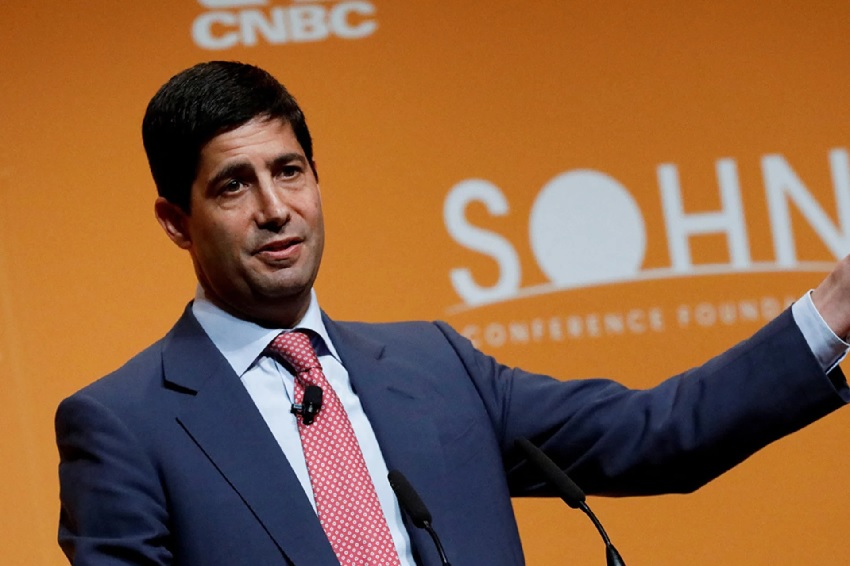
If confirmed as Fed Chairman, Kevin Warsh will push for lower inflation, a smaller balance sheet, and a narrower mandate — developments we view as significantly positive for the U.S. dollar, treasuries, and equity markets.
If Kevin Warsh is confirmed by the U.S. Senate as Chairman of the Federal Reserve — which appears highly likely — he will be focused on several priorities discussed below. Before addressing those, however, we wish to address the question of Fed independence.
Some investors continue to worry about the Fed's independence from the executive branch. In our view, the Fed will remain independent. While the Trump administration will have nominated four of the seven members of the Board of Governors (including Warsh), it is not the Board of Governors that sets interest rates — that is the role of the Federal Open Market Committee (FOMC). The FOMC has twelve voting members: the seven Board members, the President of the Federal Reserve Bank of New York, and four rotating members drawn from the other eleven regional Federal Reserve presidents. Trump appointees will therefore represent only one-third of the FOMC's voting membership.
We view the Fed as remaining an independent central bank — unlike, for example, the Bank of China, whose policies are effectively set by the government.
1. Kevin Warsh and Inflation
Kevin Warsh has stated his desire for both lower short-term interest rates and lower inflation — objectives that are not always compatible and will present a significant challenge. The Fed's preferred inflation measure, core PCE (Personal Consumption Expenditures), currently stands at 3.1%, significantly above the official target range of 1.0–2.0%.
According to economists, U.S. trade tariffs have added approximately 0.4–0.5% to inflation, and the weaker dollar has contributed a further 0.2–0.5%. For Warsh, the SCOTUS ruling on tariffs and a potential strengthening of the dollar could assist in achieving his dual objectives. A stronger currency typically reduces inflation and supports lower interest rates (as seen in Switzerland), while a weaker currency tends to drive inflation and higher rates (as seen in Turkey).
We also believe that Warsh is correct in his criticism that the Fed has been too reliant on historical data when making policy decisions, rather than focusing sufficiently on forward-looking indicators. Financial markets always focus on forward-looking information. Investors would therefore likely welcome a departure from Jerome Powell's approach, whose emphasis on lagging data contributed to the Fed being slow to recognize the surge in inflation following the COVID-19 pandemic.
2. Kevin Warsh and Quantitative Easing
Kevin Warsh has been a consistent critic of the Fed's use of its balance sheet for quantitative easing and what he has described as "subsidizing the Treasury" through bond purchases. Many investors have long worried that the size of central bank balance sheets has become a source of distortion in asset prices.
We believe that Warsh's stated intention to establish clear guidelines on the appropriate size of the Fed's balance sheet, and the conditions under which it should be deployed, is sound and would represent a positive development for investors. These two questions have never been satisfactorily addressed since quantitative easing was introduced in the aftermath of the 2008 financial crisis. A reduction in the Fed's balance sheet would, of course, be strongly positive for the U.S. dollar.
3. Kevin Warsh and the Fed's Mission
Like Treasury Secretary Scott Bessent, Kevin Warsh has criticized what he terms the "mission creep" of the Federal Reserve — the gradual expansion of the Fed's activities well beyond its statutory mandate. The Employment Act of 1946 and the Federal Reserve Reform Act of 1977 clearly define the Fed's mandate as price stability and maximum employment. The Fed was never granted by Congress any powers beyond this mandate. The Fed's involvement in financial sector regulation, ESG policy (environmental, social, governance), and other areas represent activity for which it has no explicit congressional authorization. We believe investors would welcome a Fed with a sharper, narrower focus.
We believe Kevin Warsh will push for a smaller Fed balance sheet (i.e., no further quantitative easing) and a much narrower focus on inflation and employment. His preference for forward-looking indicators would bring the Fed and financial markets into closer alignment. We therefore believe that Kevin Warsh will be a significantly positive factor for the U.S. dollar, U.S. Treasury markets, and by extension equity markets.
Jerome Powell's term as Fed Chairman ends on May 15, 2026. However, U.S. Senator Thom Tillis is currently blocking the confirmation hearings for Kevin Warsh. According to prediction markets, there is a 45% probability that Warsh will not be confirmed until after May 15. In that scenario, Jerome Powell would continue to serve as Fed Chairman on an interim basis. This also explains why financial markets have reduced their expectations for rate cuts in Q2 2026, as Powell would likely oppose any rate cut in the current environment of elevated inflation risk.